
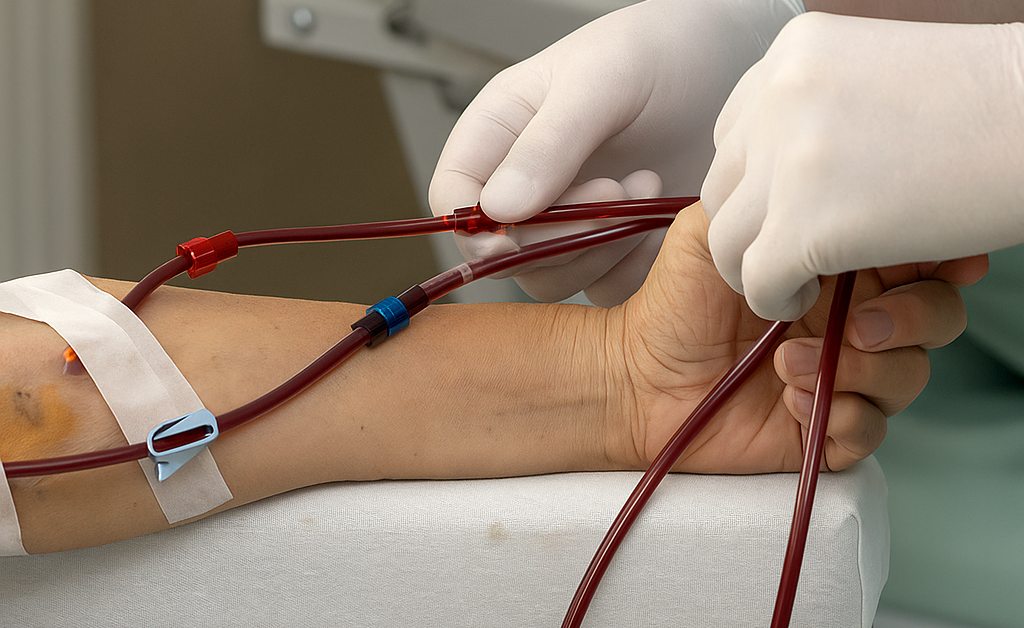
When you’re living with chronic kidney disease and undergoing dialysis, one thing becomes crystal clear: your lifeline isn’t just the dialysis machine—it’s your vascular access, particularly your arteriovenous fistula (AVF). This small surgical connection between an artery and a vein in your arm might look simple, but it’s what keeps you healthy, stable, and able to continue your treatments safely.
At CuraKidney, we remind every patient that “a healthy fistula means a healthy you.” Let’s walk through what your fistula does, how to care for it, and what signs you should never ignore.
What Is an AV Fistula?
Think of your AV fistula as a custom-built highway for your blood flow. During a minor operation, your surgeon connects an artery (which carries blood away from your heart) to a vein (which carries blood back). This increases the vein’s size and strength, making it easier for dialysis needles to access your bloodstream.
Once the fistula heals—usually after several weeks—it allows blood to flow quickly and efficiently through your dialysis machine, where it’s cleaned and returned to your body. Because of its durability and low risk of infection, an AV fistula is considered the gold standard for dialysis access.
Every session, two needles are inserted into your fistula—one to draw blood out and another to return it after filtration. When properly cared for, your fistula can last for years, even decades, making it your most reliable partner in your dialysis journey.
How to Care for Your Fistula: Protect Your Lifeline
Your fistula deserves daily care and attention. Here’s how you can keep it healthy and strong:
- Keep it clean.
Once the surgical site heals, wash your arm daily with mild soap and water, and always clean it before dialysis. Infection is rare but still possible, so cleanliness is key. - Check it every day.
You should feel a gentle vibration (called a thrill) or hear a whooshing sound (called a bruit) when you listen with a stethoscope. If you can’t feel or hear it, call your dialysis center right away—this could mean a blockage or clot. - Keep the blood flowing freely.
Never let anyone take blood pressure, draw blood, or insert IV lines into your fistula arm. Avoid tight clothing, jewelry, or carrying heavy bags on that arm. Even sleeping on your fistula arm can restrict flow—so give it room to breathe. - Avoid injury and irritation.
Don’t scratch or bump your fistula. If the area itches or feels dry, tell your doctor—there are safe creams that can help without damaging your skin. - Learn to self-check and self-care.
Many patients choose to insert their own needles (self-cannulation). It might sound intimidating, but it often reduces anxiety and improves comfort. Your CuraKidney nurses can guide you through safe techniques like the rope ladder (rotating needle sites) or buttonhole method (using the same entry points each time).
What to Watch Out For: Early Warning Signs
Even a well-maintained fistula can face occasional issues. Knowing what to look for can save you from bigger problems later.
- Bruising and swelling – Minor bruising is normal, but large or painful swelling could mean the needle slipped or pressure wasn’t applied properly.
- Redness, warmth, or pain – These may signal infection. Call your dialysis team immediately if your fistula feels hot or looks inflamed.
- Aneurysm (bulging area) – This happens when the same spot is used too often. Your nurses will rotate needle sites to prevent this.
- Cold, painful fingers – If your hand feels unusually cold or numb, you might be experiencing steal syndrome, a rare condition where the fistula diverts too much blood from your hand.
- Reduced thrill or bruit – If the vibration or sound weakens or disappears, there could be a narrowing (stenosis) or clot. Contact your unit immediately.
- Prolonged bleeding – If your access takes unusually long to stop bleeding after dialysis, it might indicate high pressure inside the fistula or medication side effects.
At CuraKidney, our nurses perform regular access flow monitoring to ensure your fistula is working well. Tests like Doppler ultrasound or fistulograms can identify narrowing early, allowing timely interventions such as fistuloplasty (widening the vessel) or declotting.
When Bleeding Becomes an Emergency
Severe bleeding from your fistula outside of dialysis is rare—but if it happens, treat it as a medical emergency.
- Apply firm pressure directly on the bleeding spot using clean gauze or even a small bottle cap to focus pressure.
- Keep pressing while you call emergency services (dial 911 or your local number)—do not stop pressing to make the call yourself.
- Raise your arm above your head to slow the bleeding.
- Stay calm and focused. Bleeding almost always stops with enough pressure in the right place.
If you’ve noticed small warning signs—like recurring scabs, shiny bulges, or slow healing wounds—report them immediately. Prevention is always better than repair.
Beyond the Fistula: Other Access Options
While an AV fistula is ideal, some patients may need alternatives:
- AV Graft: A synthetic tube connects the artery and vein. It’s ready for use within weeks but may have a higher risk of clotting or infection.
- Catheter: A temporary solution inserted into a large vein (neck, chest, or thigh). It allows immediate dialysis but carries higher risks and is not meant for long-term use.
Your nephrologist will help determine which option suits you best, considering your vein health, lifestyle, and overall condition.
Caring for Your Life, One Arm at a Time
Your fistula isn’t just a part of your treatment—it’s part of your life story. Each vibration you feel is proof that your body and your care team are working together to keep you strong.
At CuraKidney Dialysis and Renal Care Center, we help every patient understand and protect their lifeline through hands-on education, regular monitoring, and compassionate guidance. Whether you’re learning to check your thrill, mastering self-cannulation, or simply becoming more confident in your care, we’re here for you—every step, every session.
Because your lifeline matters. And at CuraKidney, so do you.
📍 CuraKidney Dialysis & Renal Care Center
G/F Ayala Malls Feliz, Pasig City (Near Marikina)
📞 +63 962 911 7952 | (02) 8652 4846
#CareComfortCura #CuraKidney #DialysisCarePH #AVFistulaCare #KidneyHealth